


The Keys in the Estate Agent’s Office
Emma collected her keys from the estate agent at 2 PM on completion day. Excited, she drove straight to her new home in Chorley with her partner. They walked through the empty rooms, planning where the furniture would go. They took photos for Instagram. They measured the living room.
At 6 PM, they locked up and left. Emma popped the keys into her handbag next to her phone and purse.

Three weeks later, during a routine follow-up call, I asked Emma the question I ask every new homeowner: “Have you changed the locks yet?”
Long pause.
“The estate agent gave me all the keys. There were loads of them. Isn’t that enough?”
This conversation happens at least twice a week during the spring moving season. New homeowners genuinely don’t realize the security risk sitting in their handbags. Those keys the estate agent handed over? Copies exist. You don’t know where.
Let me explain what every new Chorley homeowner needs to know about locks, keys, and moving house security. Not the scary version estate agents hint at—the practical, sensible version based on 15 years of helping families secure their new homes.
Why Lock Changes Matter More Than You Think
Here’s what happens to keys during a property’s lifetime.
The Key History Nobody Tracks
Your new home might be 30 years old. In that time, keys have been cut for:
- Previous owners (all of them)
- Their family members with spare keys
- Friends who house-sat during the holidays
- Builders who did renovation Work
- Plumbers and electricians for emergency access
- Estate agents for viewings
- Cleaners who had regular access
- Neighbours who kept spares “just in case.”
When you buy the house, you get the keys that the seller actually hands over. Not all the copies that exist somewhere in Chorley.
The Reality Check
I’m not suggesting previous owners plan burglaries. They don’t. But keys get lost. Friends move away and forget they still have a key. Tradespeople change over time, and keys stay in their van.
Last spring, we were called to a house in Buckshaw Village. The new owners had moved in three months earlier. Someone walked in through the front door at 2 PM on a Tuesday. Took a laptop from the home office. Left quietly.
No forced entry. The police checked the locks—they were fine. No damage anywhere.
Eventually, they discovered a local handyman who’d worked for the previous owner still had a key. He’d lent it to his apprentice. The apprentice lent it to a friend. That friend saw an opportunity.
Changing locks isn’t paranoia. It’s a basic sense.
The Three Questions Every New Homeowner Asks
Let’s address the practical concerns that are stopping people from sorting this out immediately.
Question One: “When Should I Change the Locks?”
You have three timing options, each with different advantages.
Option A: Before Completion
Some buyers arrange lock changes for completion day itself. We arrive, change everything while you’re at the solicitor’s office, and hand you fresh keys when you take possession.
Advantages:
- Maximum security from day one
- No gap period with old locks
- One less thing to worry about during the moving chaos
Disadvantages:
- Requires access before you legally own the property (seller must agree)
- Slightly more expensive if timing doesn’t work perfectly
- Risks of wasting money if completion delays
Who This Suits: First-time buyers who want everything perfect. Families with young children. Anyone who’s experienced burglary before.
Option B: Completion Day
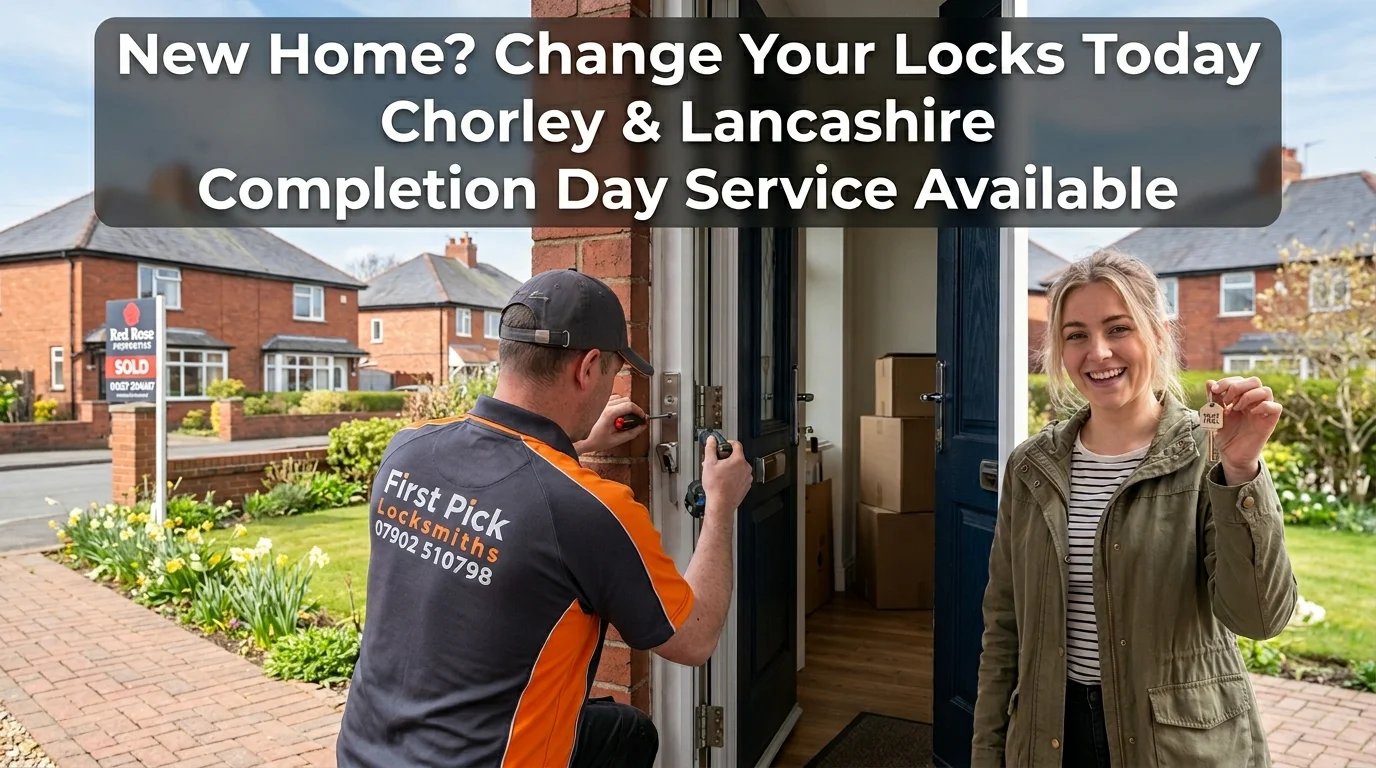
We will meet you at the property on completion day. You hand us the old keys. We change everything while you start moving in. Usually takes 1-2 hours, depending on how many locks you have.
Advantages:
- Immediate security
- Doesn’t require seller cooperation
- Fits naturally into the moving day schedule
- You’re there to supervise and ask questions
Disadvantages:
- Adds another task to an already busy day
- Might delay unpacking
- Requires scheduling during the spring’s busy period
Who This Suits: Most people. It’s the sweet spot between security and practicality.
Option C: First Week After Moving
You move in with the old locks. We visit within the first 7 days to upgrade everything.
Advantages:
- Less stressful on moving day
- Time to assess which locks actually need changing
- Can combine with other improvements you discover
Disadvantages:
- Security risk for up to a week
- Easy to forget amid moving chaos
- Spring weekends book up fast
Who This Suits: People moving to new-build properties where keys are fresh. Buyers are taking over family homes where key history is known.
My Recommendation:
Completion day or within 48 hours, whichever is earlier. The risk isn’t worth the small amount of money you might save by waiting. Spring is peak moving season in Chorley—book us at least two weeks before your completion date.
Question Two: “Which Locks Should I Replace?”
Not every lock needs immediate replacement. Let me explain how to prioritize.
Priority One: Insurance-Critical Locks
Your home insurance requires specific lock standards. These must be addressed immediately:
Front Door Lock: Must have a BS3621 approved lock. This is non-negotiable for insurance. If your current front door lock doesn’t have the British Standard Kitemark visible, it needs replacing before you sleep in the house the first night.
Back Door Lock: Same requirement. BS3621 approval is mandatory. Many back doors have cheaper locks than front doors. This is a mistake previous owners made. You don’t need to repeat it.
UPVC Door Locks: These need properly functioning multipoint locking systems. If the previous owner’s survey mentioned issues with lifting the handle or alignment problems, replace the entire mechanism.
Priority Two: Security Upgrades
Even if locks technically meet minimum standards, you might want upgrades:
Anti-Snap Cylinders: Standard on new locks we install. Prevents the most common burglary technique. If your house has cylinder locks over 5 years old, they probably don’t have anti-snap protection.
Deadbolts: Side doors and back doors benefit from deadbolts in addition to standard locks. This creates layered security.
High-Security Locks: For properties in higher-risk areas or containing valuable items, premium locks offer drill resistance, pick resistance, and bump resistance.
Priority Three: Convenience Improvements
Smart Locks: Many new homeowners install smart locks on their front door for keyless entry. Particularly useful if you have children who lose keys or elderly parents who need access.
Matching Lock Sets: Having different keys for every door is frustrating. We can install locks throughout your house that work better together, though each remains individually secure.
The Assessment Process
During our completion day visit, we assess every lock and recommend:
- Which locks must be replaced (insurance compliance)
- Which locks should be replaced (security improvement)
- Which locks could be replaced (convenience)
You decide your budget and priorities. We never pressure you to replace locks that are working adequately.
Real Example:
The Harrison family moved to Euxton last April. Their house had:
- Front door: 12-year-old Yale lock (replaced with BS3621 anti-snap lock)
- Back door: 3-year-old multipoint UPVC lock (assessed and replaced)
- Side door: 8-year-old deadbolt (replaced)
- Garage: Padlock (replaced)
Time taken: 90 minutes Result: Complete security peace of mind
The front door lock was old and didn’t meet insurance standards. Replacing everything was the right call for complete peace of mind.
Question Three: “What Types of Locks Will I Need?”
Understanding lock types helps you make informed decisions.
Standard Cylinder Locks
Most modern homes use cylinder locks on external doors. The cylinder (the part your key goes into) can be replaced without changing the entire lock mechanism.
Benefits:
- Quick to replace
- Available with anti-snap protection
- Meet BS3621 insurance standards
- Come in various security levels
UPVC Multipoint Locking Systems
If you have UPVC doors (common in properties built after 1990), you have multipoint locks. When you lift the handle, multiple locking points engage simultaneously.
What to Check:
- All locking points must engage smoothly
- Handle shouldn’t require excessive force
- Door should close flush without gaps
- No grinding or catching sounds
If any of these issues exist, the system needs attention on completion day.
Deadbolts
Traditional deadbolts add security to wooden doors. They’re mechanical, reliable, and don’t rely on springs or complex mechanisms.
Best For:
- Back doors
- Side doors
- Internal doors between garage and house
- Older properties with solid wooden doors
Mortice Locks
These locks sit inside the door (morticed into the door edge). More secure than surface-mounted locks because they can’t be easily removed.
Key Features:
- 5-lever mortice locks meet insurance standards
- Very secure when properly installed
- Common in older properties
- Ideal for wooden doors
Smart Locks
Electronic locks operated by codes, apps, or biometric readers. Popular with new homeowners for convenience.
Considerations:
- Need power (batteries or mains)
- Require WiFi for remote access features
- Should have manual key backup
- More expensive than traditional locks
Padlocks and External Security
Don’t forget garages, sheds, and gates. These need weatherproof, high-security padlocks.
Look For:
- Closed shackle design (harder to cut)
- Hardened steel construction
- Weather-resistant coating
- Security ratings (look for Sold Secure ratings)
What’s Included in Our Service
When we replace locks on completion day, you receive:
- Professional installation and alignment
- New keys (multiple sets per lock)
- Testing to ensure smooth operation
- Insurance certificates where applicable
- Guidance on proper use and maintenance
- 12-month guarantee on workmanship
Getting Your Quote
Every house is different. Lock requirements depend on:
- Type and age of property
- Number of external doors
- Current lock condition
- Insurance requirements
- Your security priorities
We provide transparent, itemized quotes with no hidden charges. Contact us with your completion date and property details for a personalized quote.
The Spring Moving Timeline: When to Do What
Spring is Chorley’s busiest moving season. March through May sees the most completions of any period. Here’s how to integrate lock changes into your moving schedule.
Four Weeks Before Completion:
Research and Planning
- Get quotes from local locksmiths in Chorley
- Ask your surveyor about the lock condition in the survey report
- Check what your home insurance requires for locks
- Research different lock types and security standards
- Budget for lock changes in your moving costs
Don’t wait until the last minute. Spring is our busiest season. Good locksmiths book up two weeks ahead during March-May.
Two Weeks Before Completion:
Book Your Service
- Confirm your completion date with your solicitor
- Book a lock change appointment for the completion day
- Provide backup dates in case of completion delays
- Ask about payment methods (we take cards, cash, and bank transfers)
- Get a written quote with a breakdown
Decisions to Make:
- Which locks definitely need replacing vs rekeying?
- Do you want to upgrade to a higher level of security?
- Need smart locks for convenience?
- Changing shed and garage locks, too?
One Week Before Completion:
Final Preparations
- Confirm appointment time with the locksmith
- Ensure you have the solicitor’s contact details
- Plan your moving day schedule around lock changes
- Arrange for someone to be at the property if you can’t be there
- Notify your locksmith immediately if completion delays
Completion Day:
The Sequence That Works
Morning:
- Complete at solicitor’s office (usually 11 AM-1 PM)
- Collect keys from the estate agent
- Drive to your new home
Early Afternoon:
- Meet the locksmith at the property (2-3 PM works well)
- Hand over all keys you received
- Show them all doors and access points
- Discuss any additional work needed
Mid-Afternoon:
- Locksmith works (1-2 hours typically)
- You can start moving in while we work
- We test everything before leaving
- You receive new keys and certificates
Why This Timing Works:
You’re not standing around waiting. We work while you coordinate removals. By 4-5 PM, you have secure locks and can focus on unpacking. Your first night in the new home feels safe.
First Week in Your New Home:
Security Checklist
Beyond locks, check these:
Day One:
- Test all new locks with both keys
- Practice locking up properly
- Note which key fits which door
- Store spare keys safely
Day Three:
- Check if UPVC doors need adjustment
- Test window locks throughout the house
- Identify any additional security needs
- Consider outdoor security lighting
End of Week One:
- Get spare keys cut from your new sets
- Decide on spare key storage (never outside!)
- Update your home insurance with any improvements
- Consider alarm systems if needed
Common Mistakes First-Time Buyers Make
I’ve seen these patterns hundreds of times. Learn from others’ mistakes.
Mistake One: “I’ll Do It Next Month”
Three months have become six months. Six months becomes a year. Eventually, you forget completely. Meanwhile, those keys are still out there.
Solution: Book before completion. Make it part of the moving process, not an afterthought.
Mistake Two: “The Estate Agent Said All Keys Were Returned”
Estate agents don’t track historical keys. They only know about the keys the seller provided. That’s not the same thing.
Solution: Assume unknown keys exist. Change or rekey accordingly.
Mistake Three: “I Can’t Afford It Right Now”
You’ve just spent thousands on surveys, searches, stamp duty, and removals. Lock changes feel like one expense too many.
Solution: Factor it into your moving budget from day one. Professional lock replacement is a necessary security investment, not an optional extra. It’s less than one month’s mortgage payment for complete security and peace of mind.
Mistake Four: “DIY Lock Replacement Looks Easy on YouTube”
It does look easy. Until you strip the screws. Or drop parts you can’t identify. Or discover your door frame doesn’t match standard dimensions.
Solution: Unless you’ve done it multiple times before, use a professional locksmith. We’ve seen too many DIY disasters requiring expensive repairs.
Mistake Five: “I Only Need to Change the Front Door”
Burglars know people think this way. They check the back door first. Most break-ins use rear access because it’s less visible.
Solution: Secure all external doors. Front, back, side, garage. Complete protection costs only marginally more than partial.
Mistake Six: “Smart Locks Are Better Than Traditional Locks”
Smart locks offer convenience. But they need WiFi, batteries, and technical knowledge. They can fail. For new homeowners dealing with moving stress, traditional high-security locks often make more sense initially.
Solution: Start with excellent traditional locks. Add smart features later if you want them.
What Your Home Insurance Actually Requires
Most first-time buyers don’t read their insurance policy carefully. The requirements matter.
Standard UK Home Insurance Requirements:
Minimum Lock Standards:
- All external doors must have BS3621-approved locks
- Ground floor and accessible windows need key-operated locks
- UPVC doors need multipoint locking systems
- Locks must be properly engaged when the property is unattended
What This Means:
If your house gets burgled and the locks don’t meet these standards, your insurer might refuse the claim. Even if you had insurance, you’re not covered.
Checking Your Current Locks:
BS3621 locks carry the British Standard Kitemark. Look for:
- Three-star rating symbol
- BS3621 marking visible
- Certification number
If you can’t see these, your locks probably don’t meet standards.
The Insurance Certificate:
When we install BS3621 locks, we provide a certificate. Keep this with your insurance documents. If you ever claim, it proves compliance.
Higher-Value Properties:
Some insurance policies for properties over £250,000 require:
- Monitored alarm systems
- Additional security measures
- Regular security updates
Check your specific policy before completion. Finding out afterwards costs money and causes stress.
Integrating Lock Changes with Other Moving Tasks
Lock security doesn’t exist in isolation. Coordinate with your other home improvements.
If You’re Decorating Immediately:
Have locks changed before painters arrive? New locks won’t get paint-splattered. Keys stay clean. Workers get the new keys only.
If You’re Renovating:
Change locks twice. Once you complete (basic security). Again, when renovations finish (upgraded security matching your improved property).
Give builders temporary keys you’ll throw away. Or better yet, use a smart lock with temporary codes you disable when Work finishes.
If You’re Doing a Phased Move:
Some people complete it, then gradually move over two weeks. Change locks on completion day, even if you’re not sleeping there yet. Otherwise, your belongings are vulnerable while you shuttle items back and forth.
If There’s a Delay Between Exchange and Completion:
Don’t arrange lock changes until you have actual keys. Completion dates slip. We’ve had appointments canceled three times because the chain collapsed. Book provisionally, confirm when completion happens.

The New Build Exception (And Why It’s Not Always Safe)
New build homes come with fresh keys. Surely they’re secure?
Not necessarily.
Who Has Keys to Your New Build?
- Site manager
- Show home staff
- Various contractors
- Snagging teams
- Property inspector
- Photographer for marketing
Some developers change locks before handover. Many don’t. Ask specifically. If they can’t confirm that the locks were changed immediately before you collected the keys, change them yourself.
The Developer’s Lock Quality:
New builds often have basic locks meeting minimum building regulations. These aren’t always insurance-compliant or high-security.
Check what you’ve actually got. We frequently upgrade new build locks because developers install cheap hardware.
Beyond Doors: Complete Moving House Security
While we’re changing locks, consider these additional security measures.
Window Locks:
Your survey should have checked these. But surveyors sometimes miss it. Test every window lock personally. Ground floor and accessible windows need working key locks.
Professional window lock installation ensures proper function and insurance compliance.
Garage and Shed Security:
These often have terrible locks. Old sheds might have a basic padlock from 1995. Garages sometimes have no lock at all—just a handle.
Burglars love garages. Tools, bikes, expensive equipment. All easily sold.
Proper garage security with weatherproof, high-security padlocks makes a significant difference.
Gate and Side Access:
If you have a gate to your back garden, it needs a decent lock. Burglars use side access to reach rear doors unseen.
Install a proper deadbolt on gates. Not just a basic latch. This prevents easy access to your property’s rear.
The Perimeter Walk:
On completion day, walk the entire perimeter of your property. Look for:
- Broken fencing offering easy access
- Gaps in hedges create entry points
- Climbing aids near windows (bins, furniture, ladders)
- Dark areas needing security lighting
Fix these within your first month. Home security is about layers. Locks are one layer. Property boundaries are another.
Questions to Ask Your Locksmith Before Booking
Not all locksmiths offer the same service. Ask these questions upfront.
Essential Questions:
“Are you insured for property damage?” Good answer: “Yes, we have £2 million public liability insurance.”
“What locks do you recommend for my type of property?” Good answer: Specific recommendations based on your description. Bad answer: Vague generalizations.
“Do your locks meet BS3621 standards?” Good answer: “Yes, all our locks come with certification.”
“What happens if you can’t make it on completion day?” Good answer: “We provide a backup locksmith or reschedule immediately at no extra charge.”
“How long will the work take?” Good answer: a specific time estimate based on the number of locks.
“What payment methods do you accept?” Good answer: Multiple options (card, cash, transfer, invoice for later payment).
Red Flags:
- Can’t provide proof of insurance
- Quotes seem suspiciously cheap
- No fixed address or verifiable business
- Pressure to pay cash only
- Can’t explain the Work they’ll do
- No availability for weeks (during spring, some delay is normal though)
Real Jobs from Chorley New Homeowners
Here are actual moving house jobs we completed in spring 2025. Names changed for privacy.
The Roberts Family – First-Time Buyers, Chorley Town Centre Terrace
Property: 2-bed terrace, 1920s Work completed: Replaced front and back door locks, upgraded garage security Time: 45 minutes Outcome: Met insurance standards, fully secure from day one
The Kumar Family – Family Move, Buckshaw Village Semi
Property: 4-bed semi, 2005 build Work completed: Upgraded front door lock to anti-snap cylinder, replaced UPVC back door multipoint system, added secure side gate lock Time: 90 minutes Outcome: Premium security, insurance compliant throughout
The Green Family – First-Home Purchase, Euxton Detached
Property: 3-bed detached, 1960s Work completed: Replaced all three external door locks with BS3621 approved systems, installed garage deadbolt, fitted window locks on three ground floor windows Time: 2.5 hours Outcome: Complete security overhaul exceeding insurance requirements
The Young Family – Moving Within Chorley
Property: 3-bed semi, 1990s Work completed: Installed coordinated lock system throughout property, replaced UPVC door multipoint lock with upgraded mechanism Time: 2 hours Outcome: Maximum security with improved convenience
The Coordinated Lock System Option
This is perfect for families who hate carrying multiple keys.
How It Works:
We can install locks throughout your house that work in a coordinated way, reducing the number of keys you need to carry while maintaining security.
Benefits:
- Incredible convenience
- Less fumbling for the right key
- Easier for elderly family members
- Looks professional
- Still individually secure
Who It Suits: Larger homes with multiple access points. Families with children (fewer keys to lose). Anyone who values convenience alongside security.
What to Expect: This requires careful planning and professional installation. During your consultation, we’ll discuss your property layout and recommend the best approach for your needs.
What Happens If You Don’t Change Locks
Let’s be realistic about the actual risks.
Best Case Scenario: Nothing happens. All those old keys stay lost, forgotten, or in the hands of honest people. You got lucky.
Realistic Risk Scenario: Someone with a key enters your home while you’re at Work. Takes small, valuable items you won’t notice immediately: laptops, jewellery, cash. No forced entry means the police investigation is limited. An insurance claim is complicated because you can’t prove someone broke in.
Worst Case Scenario: Complete burglary. Thousands of dollars in stolen property. Insurance claim denied because you didn’t meet lock standards. You’re left paying for everything, including the damaged property.
The Statistical Reality:
Only about 2-3% of new homeowners experience issues because they didn’t change the locks. But that’s still 1 in 40 homes. Would you board a plane if 1 in 40 crashed?
The gamble isn’t worth the modest saving.
Your Complete Moving House Lock Change Checklist
Print this. Tick boxes. Get it done.
Before Completion:
- Research local Chorley locksmiths
- Get written quotes
- Check insurance requirements
- Budget for lock changes in moving costs
- Book a provisional appointment
Exchange to Completion:
- Confirm completion date
- Confirm locksmith appointment
- Decide rekey vs replace
- Plan moving day schedule
- Prepare payment
Completion Day:
- Collect all keys from the estate agent
- Count keys received
- Meet the locksmith at the property
- Provide access to all doors
- Test new locks before the locksmith leaves
- Store keys safely
First Week:
- Test all locks daily
- Get spare keys cut
- Update insurance with improvements
- Check window locks
- Assess additional security needs
- Consider alarm systems
First Month:
- Store spare keys properly
- Photograph locks and keys for records
- Note any issues for follow-up
- Plan any additional security upgrades
Final Advice for New Homeowners
You’ve worked hard to buy your first home. You’ve saved deposits, survived conveyancing, dealt with solicitors, and coordinated removals. Lock security might seem like a small detail amid everything else.
It’s not.
Those locks protect everything you’ve worked for. Your belongings, yes. But more importantly, your family’s safety and your peace of mind.
Emma, from our opening story, eventually changed her locks three months after moving. She spent those three months worrying every time she left the house and wondering if someone might walk in. Checking rooms when she got home to see if anything had moved.
The relief she felt after we changed her locks? Worth ten times what she paid.
Don’t put yourself through that stress. Make lock changes part of your moving process from day one. It’s not extra—it’s essential.
We help dozens of Chorley families every spring navigate this exact process. Whether you need simple rekeying or a complete security upgrade, whether it’s your first home or your fifth, we make it straightforward and stress-free.
Contact us today to discuss your lock needs for moving house. We’ll walk you through options, provide transparent pricing, and book you in for completion day.
Welcome home. Make it truly yours—and truly secure.
Frequently Asked Questions About Moving House and Lock Changes
Do I legally have to change locks when I move house?
There is no legal requirement to change locks when moving house in the UK. However, your home insurance policy almost certainly requires BS3621-compliant locks on all external doors. If your new home doesn’t have these and you don’t upgrade, your insurance might be void. Additionally, changing the locks is the only way to guarantee that no one else has access. While not legally required, it’s practically essential for both security and insurance compliance. Professional locksmiths can assess whether your current locks meet standards.
Which locks should I prioritize replacing when I move house?
Prioritize locks in this order: First, your front door lock must meet BS3621 insurance standards—this is non-negotiable and should be done on completion day. Second, back doors and side entrances need the same attention as burglars often use rear access. Third, UPVC multipoint locking systems should be assessed and replaced if they’re not functioning smoothly or are over 10 years old. Fourth, garages and sheds need weatherproof, high-security locks. Most Chorley homeowners choose to replace all external door locks on completion day for complete peace of mind. During your consultation, we assess each lock and provide specific recommendations based on condition, age, and insurance requirements. Contact us for a property-specific assessment.
When is the best time to change locks during the moving process?
The optimal time is on completion day or within 48 hours thereafter. Booking lock changes for completion day means your property is immediately secure with no gap period using old keys. During the spring moving season (March-May) in Chorley, book your locksmith at least 2 weeks before your completion date, as this is peak season. Some buyers arrange lock changes before completion (requires seller agreement), but most find completion day works best—we arrive while you’re unpacking and complete Work in 1-2 hours. Avoid waiting longer than a week, as security risks increase, and it’s easy to forget amid moving chaos.
What should I ask the estate agent about keys when I collect them?
Ask these specific questions: “How many sets of keys exist for each door?” “Has anyone else had keys cut during viewings?” “Were these all the keys the seller provided?” “Do you know if locks have ever been changed?” The estate agent typically only knows about the keys the seller handed over—they won’t know about historical copies. Count every key you receive and photograph them for your records. After receiving keys, immediately verify each one works correctly. Within 48 hours, change or rekey all locks regardless of estate agent assurances about “all keys returned.”
Should I change the garage and shed locks when moving house, too?
Absolutely yes. Garages and sheds often contain thousands of pounds worth of tools, bikes, lawn equipment, and other valuable items. Most have terrible security—basic padlocks from decades ago or no locks at all. Burglars specifically target garages because access is often easier than main houses and valuables are concentrated. Invest in proper garage security with weatherproof, high-security padlocks rated for outdoor use. Side gates also need proper deadbolts as they provide hidden access to rear doors. Complete security means securing all entry points, not just your front door. Contact us for a full property security assessment during your moving house lock change appointment to address all vulnerable access points.
About First Pick Locksmiths. First Pick Locksmiths has been helping Chorley families secure their new homes since 2009. We understand the stress of moving house and make lock security straightforward, transparent, and affordable. Spring is our busiest season—we complete 40-50 moving house lock changes between March and May each year. Our team provides honest advice about what you actually need versus unnecessary upgrades, always prioritizing your security and budget.
Service Areas: Chorley, Preston, Leyland, Wigan, Bamber Bridge, Coppull, Standish, Buckshaw Village, Euxton, and throughout Lancashire.
