


Your Home Is Vulnerable During Renovations
Spring renovation season is here in Leyland. Skips appear in driveways. Builders arrive early. Vans park on streets. Your home looks busy and active.
But here’s the problem. All this activity creates security risks. Home renovation security, Lancashire experts see it every year. Burglars love renovation projects. They provide perfect cover.
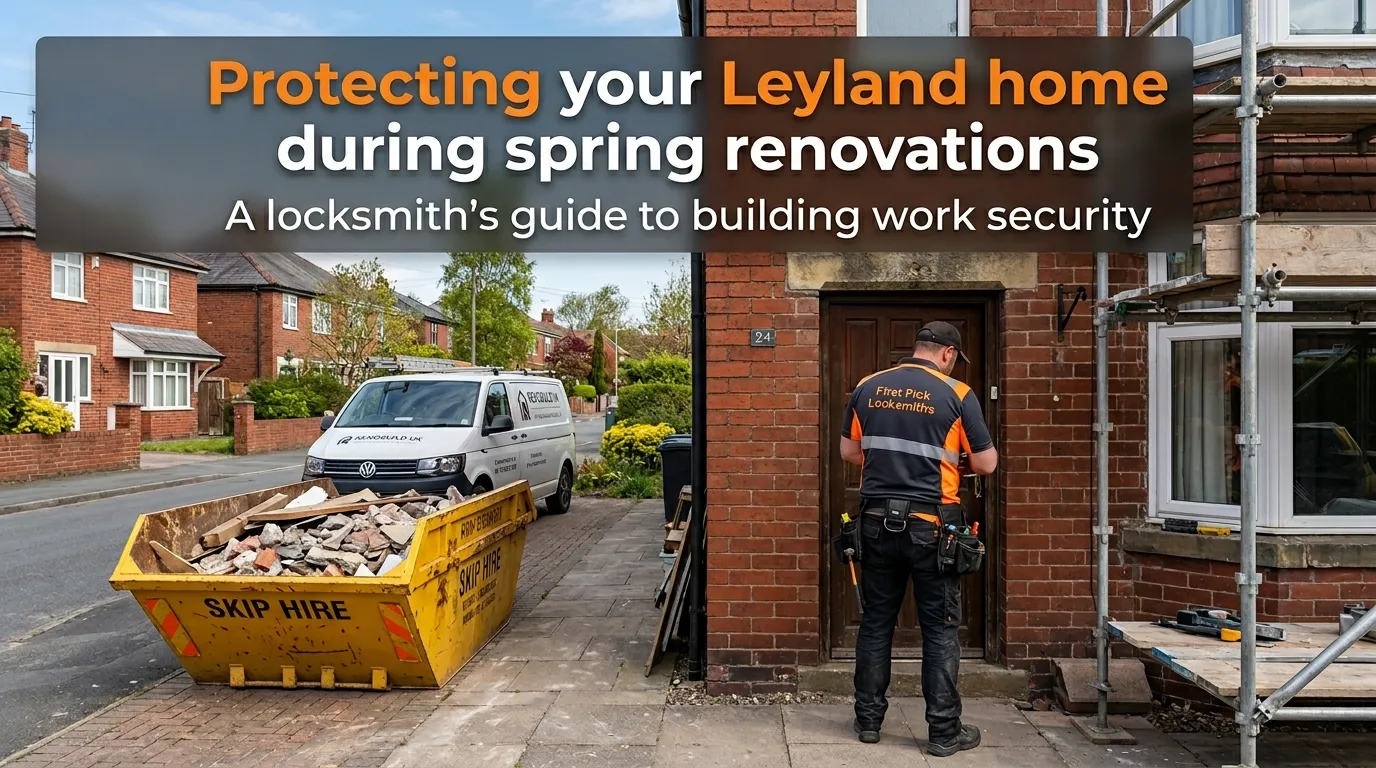
I’ve been a locksmith in Lancashire for 15 years. I work with First Pick Locksmiths. We secure homes across Leyland, Chorley, and Preston. Every spring, we get the same calls. Homeowners discover security problems during or after building work.
This guide uses real cases from Leyland properties. You’ll learn how renovations create risks. You’ll see which security measures actually work. You’ll know when to upgrade your locks.
Why Building Work Attracts Burglars
Renovation projects send signals to criminals. These signals say “this home is worth watching.”
Activity Provides Cover
Normal renovation activity helps burglars hide. A person watching your house looks suspicious on a quiet Tuesday. The same person looks normal when builders are working. Vans come and go. People walk around properties. Strangers check measurements.
Burglars blend into this chaos. They observe your routines. They note when you leave. They see which rooms have valuables. All while looking like another tradesperson.
Visible Wealth Indicators
Renovations signal money. New kitchen? You have disposable income. Loft conversion? Valuable items need protecting. Extension project? The home contains things worth stealing.
Lancashire Police data shows this pattern. Areas with active renovation work experience 23% more burglary attempts. Leyland neighborhoods like Worden see this during the spring building season.
Temporary Security Gaps
Building work creates access points. Back doors stay unlocked for builder access. Windows remain open for ventilation. Side gates get propped open. Security systems get temporarily disabled.
These gaps last weeks or months. Burglars know this. They watch for properties with scaffolding. They target homes with skips outside. They wait for the right moment.
Multiple Unknown People
Renovation projects bring strangers to your property. Builders. Electricians. Plumbers. Plasterers. Delivery drivers. Inspectors.
Can you identify everyone who’s been inside your Leyland home? Most homeowners can’t. One person in twenty might be watching rather than working.
The Three Critical Security Phases
Home renovation security in Lancashire requires planning across three distinct phases. Each phase has specific vulnerabilities.
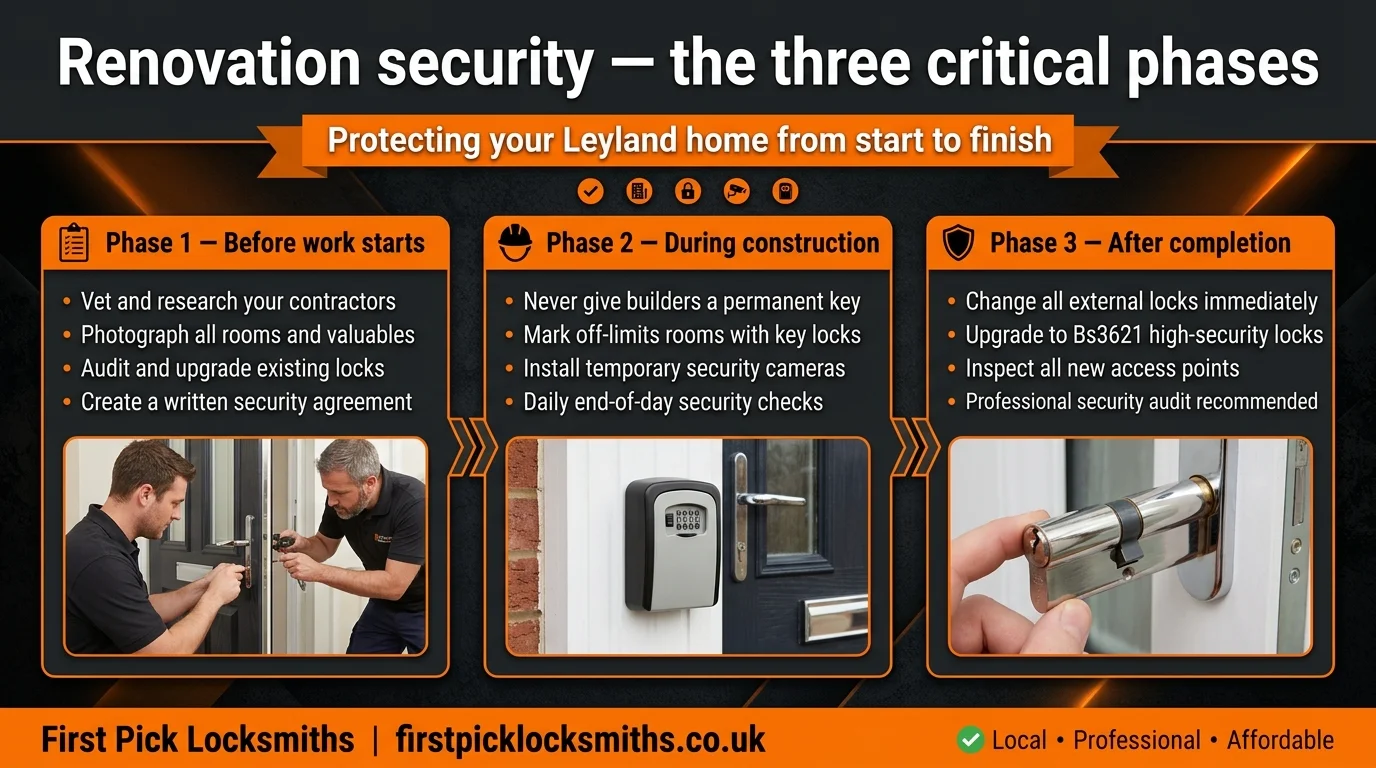
Phase 1: Pre-Renovation Planning
Security starts before the first hammer swings.
Choose Reputable Contractors
Research your builders thoroughly. Check reviews. Verify insurance. Ask for references from other Leyland homeowners. Good contractors understand security concerns.
Bad contractors create risks. They might leave properties unsecured. They could share information about your home. Some have connections to criminal networks.
First Pick Locksmiths recommends these checks:
- Verify business registration
- Check public liability insurance
- Read recent Google reviews
- Ask for local references
- Meet them in person before hiring
Document Your Property
Photograph every room before work starts. Include:
- All valuables and their locations
- Existing lock conditions
- Window mechanisms
- Door hardware
- Security system setup
- Jewelry storage areas
These photos serve two purposes. They document what you owned before work started. They show if anything moves during the project.
Store photos securely off-site. Cloud storage works well. Email copies to yourself. Don’t leave them accessible on your property.
Audit Current Security
Before renovations begin, assess your existing security. Many Leyland homes have locks that are over 10 years old. These need upgrading regardless of building work.
Check:
- All external door locks (front, back, side)
- Ground floor window locks
- Garage door security
- Gate locks and latches
- Shed and outbuilding locks
If your locks are old or basic, upgrade before renovations start. This protects against both builders and burglars.
Create a Security Agreement
Put security expectations in writing. Your contract should specify:
- Who has keys and when
- Locking procedures at day’s end
- Which areas remain off-limits
- Security system protocols
- How to handle visitors
Good builders appreciate clear security protocols. They protect their reputation, too.
Phase 2: During Active Construction
The construction phase presents maximum vulnerability. This is when Leyland homes face the highest risk of break-ins.
Key Control Is Critical
Never give builders a permanent key to your home. Use these alternatives:
Temporary Locks: Install basic locks just for the renovation. Replace them afterward.
Combination Boxes: Mount a key safe outside. Change the combination weekly. Remove it when work finishes.
Daily Key Exchange: Meet builders to hand over keys each morning. Collect them every evening. This takes time but provides maximum control.
Many Leyland homeowners skip this step. They hand over keys on day one. This creates a risk that lasts beyond the renovation. Who made copies? Who else got access? You’ll never know.
Establish Clear Boundaries
Mark areas as off-limits. Use locked doors for:
- Bedrooms (especially the main bedroom)
- Home offices
- Storage areas
- Any room with valuables
Even if you trust your builders, limit access. This protects against their subcontractors. It protects against their associates. It protects against opportunistic theft.
One First Pick Locksmiths client learned this the hard way. They left the bedrooms accessible. A subcontractor’s friend “helped” one day. £3,400 in jewelry disappeared. Police never recovered it.
Daily Security Checks
Create an end-of-day security routine:
4:30 PM – Before Builders Leave:
- Walk through with the site supervisor
- Verify all tools are accounted for
- Check that temporary barriers are secure
- Confirm tomorrow’s access requirements
6:00 PM – After Builders Depart:
- Lock all external doors
- Close and lock all windows
- Activate security systems
- Check skips are positioned away from the house access
- Verify side gates are secured
Before Bed:
- Recheck all entry points
- Ensure temporary doors are secured
- Test alarm system
- Confirm mobile phone is charged (for emergency calls)
This routine takes 15 minutes. It prevents 90% of construction-phase security issues.
Secure Building Materials
Materials left outside attract thieves. But they also provide access tools. A ladder left in your garden helps burglars reach upper windows. Scaffolding creates easy second-story access.
At the end of each workday:
- Move ladders to locked storage
- Remove scaffolding toe boards at night
- Lock away power tools
- Secure valuable materials
Builders should do this automatically. Many don’t. Take responsibility for the security of your Leyland property.
Monitor Site Activity
You can’t be home every minute. But you can monitor remotely.
Temporary Cameras: Install battery-powered security cameras for the duration. Ring, Arlo, or Blink systems work well. Position them to cover entry points and work areas.
Smart Doorbells: Video doorbells record who comes and goes. They timestamp all activity. Review footage weekly to verify that only authorized people accessed your property.
Neighbor Watch: Ask trusted neighbors to note unusual activity. Give them your mobile number. Request they call if strangers appear when builders aren’t scheduled to be there.
Lancashire Police recommend this layered approach. It deters opportunistic crime. It provides evidence if problems occur.
Phase 3: Post-Renovation Security Reset
Renovation completion doesn’t end security concerns. This phase requires specific actions.
Change All Locks Immediately
This is non-negotiable. The day after your final inspection, change every external lock. Here’s why:
You don’t know who had keys during construction. The main builder, yes. But also:
- Their employees
- Subcontractors
- Material suppliers
- Friends who “helped out.”
- Anyone who borrowed keys
One key could have been copied. Multiple copies might exist. You’ll never know unless you change locks.
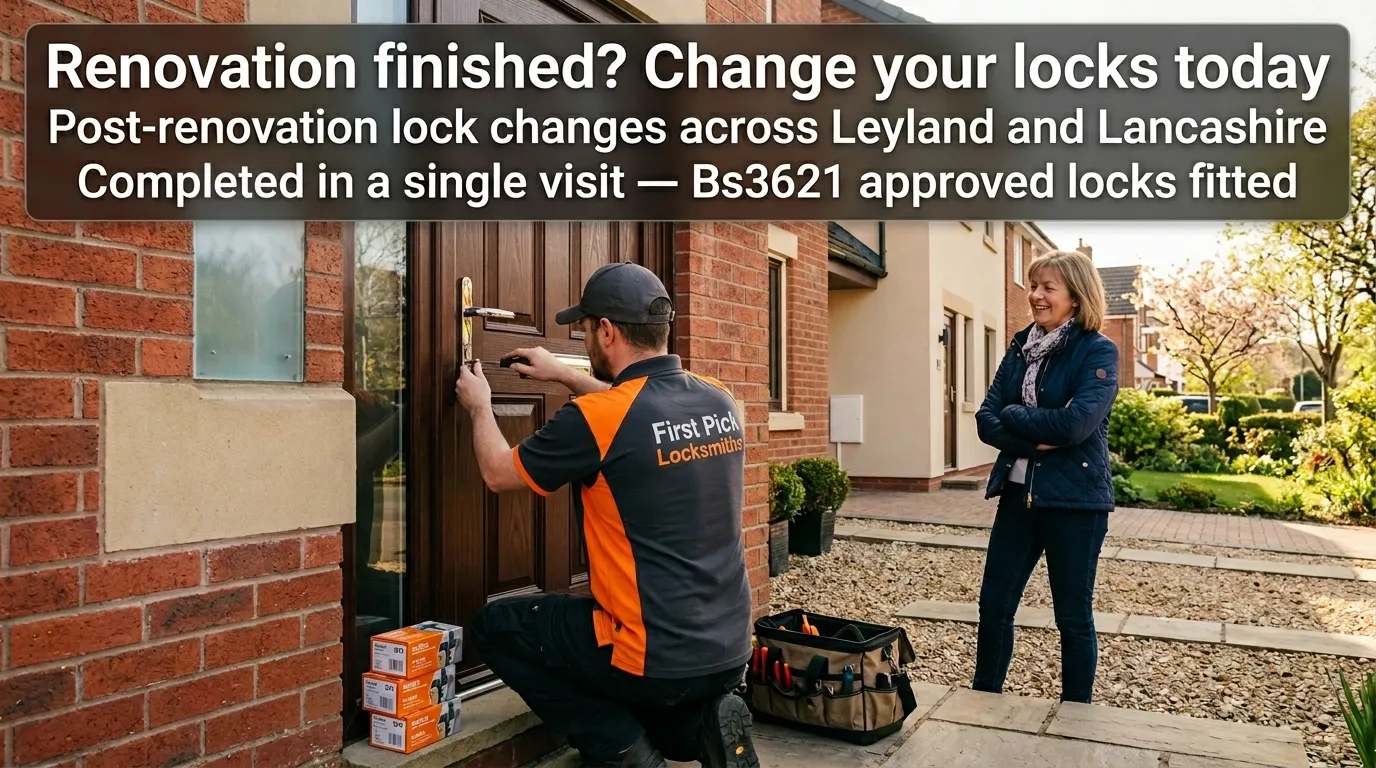
First Pick Locksmiths offers post-renovation lock changes specifically for Leyland homes. We replace all external door locks in one visit. Most homes take 2-3 hours.
This service includes:
- BS3621-approved locks on all doors
- Anti-snap cylinders for UPVC doors
- New key sets (5 keys per door)
- Security assessment of renovation work
- Recommendations for additional measures
Upgrade to High-Security Locks
Many Leyland homes use basic locks. Renovation completion is the perfect time to upgrade.
Standard locks from 10+ years ago have problems:
- Bump key vulnerable
- Easy to pick
- Snap-prone cylinders
- Weak strike plates
Modern high-security locks resist these attacks. They meet BS 3621 standards. Insurance companies prefer them. They reduce burglary success by 64%.
High-security lock installation provides long-term protection.
Inspect All Access Points
Renovations sometimes create new vulnerabilities. Walk your property looking for:
New Entry Points: Did building work create accessible windows? Does the new decking reach second-floor windows? Did the loft conversion add vulnerable access?
Weakened Structures: Check door frames for damage. Look for loosened window frames. Verify all strike plates remain firmly attached.
Overlooked Gaps: Extensions sometimes create gaps between old and new construction. Check where new walls meet old. Verify that no gaps provide access.
One Leyland client discovered that their extension created a gap between the garage and the house. Burglars could reach through and unlock the internal door. A locksmith identified this during post-renovation inspection.
Update Security Systems
Renovation work often disrupts security systems. After completion:
Test All Sensors: Verify motion detectors still work. Check door/window sensors register properly. Test panic buttons if installed.
Add New Zones: Extensions or conversions need additional coverage. Add sensors to new rooms. Update your alarm system programming.
Reposition Cameras: Building changes might block camera views—reposition to cover all entry points. Ensure new doors and windows have coverage.
Professional security companies offer post-renovation assessments. They verify your system covers the modified property layout.
Conduct a Professional Security Audit
After major renovations, consider a professional locksmith assessment. First Pick Locksmiths provides this service across Leyland and Lancashire.
Our audit includes:
- Testing all locks for proper function
- Checking door and window security
- Identifying new vulnerabilities
- Recommending specific upgrades
- Providing a written security report
The report often identifies issues homeowners miss. It provides peace of mind that renovation security gaps are closed.
Common Renovation Security Mistakes in Leyland
These mistakes happen repeatedly in Lancashire. Learn from others’ experiences.
Mistake 1: “Our Builder Is Trustworthy”
Trust doesn’t equal security. Good builders appreciate proper protocols. They understand why you protect your property.
The risk isn’t usually the main builder. It’s the people they bring. Subcontractors. Helpers. Friends covering a sick day. Your builder vouches for them, but they don’t actually know their history.
Mistake 2: Keeping Valuables Accessible
Some homeowners leave jewelry, cash, and important documents in bedrooms during renovations. They assume builders won’t enter those rooms.
Wrong assumption. Builders need bathrooms. They might grab tools from unexpected rooms. They could wander looking for you.
Move all valuables to truly secure storage:
- Bank safe deposit boxes
- Locked home safe (bolted down)
- Trusted family member’s house
- Off-site storage unit
Mistake 3: Ignoring Skip Security
Skips create two security problems. First, they provide access to upper floors for climbing. Position them away from the house.
Second, they contain information. Thrown-away documents might reveal financial details. Credit card statements. Bank letters. Personal information.
Shred documents before skip disposal. Better yet, use a separate confidential waste service.
Mistake 4: Not Documenting Who Accessed Property
Keep a log of everyone who enters during renovations:
- Date and time
- Name
- Company
- Purpose
- Areas accessed
This creates accountability. If something goes missing, you know who had access and when. It also deters opportunistic theft—people behave better when they know they’re logged.
Mistake 5: Delaying Lock Changes
Many Leyland homeowners plan to change locks “eventually.” They finish renovations in May. They think about changing locks. Life gets busy. Six months pass. Locks still haven’t changed.
This creates long-term vulnerability. Who knows how many key copies exist? Change locks within 48 hours of renovation completion. Book your locksmith before the final inspection.
Builder Access Security Solutions
Several systems help manage builder access without compromising security.
Smart Locks with Temporary Codes
Modern smart locks allow temporary access codes. You create a code for the renovation duration. Delete it when work finishes.
Benefits:
- No physical keys to copy
- Track who accessed when
- Change codes weekly
- Remote lock/unlock capability
- Automatic locking when builders leave
Brands like Yale, August, and Nuki work well for home security during renovations.
Keyed-Alike Systems
If you’re replacing multiple locks anyway, consider keyed-alike systems. One key opens all external doors.
For renovations, install temporary keyed-alike locks. Give builders one key that opens front, back, and side doors. After work finishes, replace the entire system.
This approach costs more upfront. But it provides a clean security reset when renovations are complete.
Lockable Internal Doors
Most Leyland homes have non-locking internal doors. Bedrooms use privacy latches, not key locks.
For renovation security, install temporary key locks on bedroom and office doors. A locksmith can install them in 10 minutes each.
Remove them after renovations if you prefer. Or keep them for permanent privacy.
When Building Work Compromises Your Locks
Renovation activity can damage existing locks. Watch for these problems.
Dust and Debris
Building dust infiltrates locks. It mixes with lubricant, creating a grinding paste. This wears internal components rapidly.
During renovations, cover lock cylinders with tape. Clean them weekly with compressed air. After work finishes, have a locksmith service all locks.
Frame Damage
Removing old doors or windows can damage frames. This weakens lock mounting points.
Check all door frames after work. Look for:
- Loose strike plates
- Cracked wood around locks
- Gaps between the frame and the wall
- Screws that won’t tighten
Damaged frames need repair before locks can secure properly. A locksmith and carpenter can work together on this.
Misalignment
Building work shifts structures slightly. Doors that closed perfectly might now stick. Locks might not align with strike plates.
Test all doors after renovations. They should close smoothly without forcing. Locks should engage without pressure. If you’re forcing anything, call a locksmith.
Misaligned locks fail when you need them. They also wear faster, requiring earlier replacement.
Paint and Sealant
Painters often paint over locks. Sealant gets into the mechanisms. This causes:
- Sticky keys
- Difficult turning
- Incomplete locking
- Premature wear
Clean locks thoroughly after painting. Use white spirit on a cloth. Work keys in and out several times. Add fresh lubricant.
If the paint seals a lock, it might need to be replaced. Paint inside cylinders ruins them permanently.
Insurance Considerations During Renovations
Your home insurance has specific requirements during building work. Failure to comply could void coverage.
Notify Your Insurer
Most policies require notification of major renovations. Call your insurance company before work starts. Describe the project. Ask about specific requirements.
Some insurers want:
- Contractor insurance verification
- Security measure details
- Estimated completion date
- Value of work being done
Failing to notify might void your policy. If burglary occurs during undisclosed renovations, they could refuse payment.
Understand Coverage Limits
Standard home insurance might not cover:
- Materials stored on the property
- Tools belonging to contractors
- Temporary structures
- Damage during construction
You might need additional coverage during renovations. Discuss this with your insurer.
Document Security Measures
Keep records of security steps you take:
- Receipts for lock changes
- Photos of secured areas
- Contractor agreements mentioning security
- Log of who accessed the property
If you claim theft during renovations, insurers want proof you took reasonable security measures. This documentation provides that proof.
Local Resources for Leyland Homeowners
Lancashire offers specific security resources during building work.
Lancashire Police Building Work Security Program
Lancashire Police runs a renovation security awareness program. They provide:
- Free security assessments for major renovations
- Advice on contractor vetting
- Temporary security equipment loans
- Incident reporting procedures
Contact your local Leyland police station for information. This service is free to Lancashire residents.
First Pick Locksmiths Renovation Security Package
We created a specific package for Leyland homeowners during building work:
Package Includes:
- Pre-renovation security assessment
- Temporary lock installation if needed
- Weekly security check-ins
- Post-renovation complete lock change
- 12-month security monitoring
Contact us for renovation security services specific to your Leyland property.
Chorley and South Ribble Trading Standards
If you have concerns about contractor behavior, contact Trading Standards. They investigate:
- Unlicensed builders
- Security protocol violations
- Suspected criminal activity
- Consumer protection issues
This free service protects Lancashire homeowners.

Your Renovation Security Checklist
Save this checklist. Use it for any Leyland home renovation project.
Two Weeks Before Start:
- Research and vet contractors thoroughly
- Photograph all rooms and valuables
- Audit current lock security
- Move important valuables off-site
- Notify the insurance company
- Create a written security agreement
- Purchase temporary security equipment
Week 1 of Renovation:
- Implement a key control system
- Mark off-limits areas clearly
- Install temporary cameras
- Brief neighbors on project timeline
- Start daily security log
- Test alarm system functionality
During Renovation (Weekly):
- Review camera footage
- Check daily security logs
- Verify all contractors
- Inspect temporary barriers
- Test all locks
- Remove debris from the property
- Update insurance if timeline changes
Final Week of Renovation:
- Book a locksmith for lock changes
- Schedule security system update
- Plan final walk-through
- Retrieve all keys from contractors
- Document completion date
Immediately After Completion:
- Change all external door locks
- Upgrade to high-security locks
- Test all windows and doors
- Update alarm system programming
- Conduct a professional security audit
- Update insurance on completion
- Store security documentation
Protection Requires Planning
Spring renovations make Leyland homes more beautiful. They also create security vulnerabilities. The difference between safe and sorry is planning.
Home renovation security in Lancashire requires three things: preparation before work starts, vigilance during construction, and a complete security reset after completion.
Don’t assume builders will protect your property. Don’t hope nothing goes wrong. Take active steps. Control access. Change locks. Protect what matters.
First Pick Locksmiths has secured Leyland properties through thousands of renovations. We understand the risks. We know the solutions. We provide the services that keep families safe during building work.
Your home deserves protection during its transformation. Contact us before your next renovation project. We’ll ensure your security stays solid while everything else changes.
Schedule your pre-renovation security assessment today. Protect your Leyland home the right way.
Service Areas: First Pick Locksmiths serves Leyland, Chorley, Preston, Buckshaw Village, Euxton, Whittle-le-Woods, Bamber Bridge, and all Lancashire areas.
24/7 Emergency Service: https://firstpicklocksmiths.co.uk/24-hour-emergency-locksmith-chorley/
All Lock Services: https://firstpicklocksmiths.co.uk/lock-repair-replacement-chorley/
