


Winter in Chorley creates a common problem for homeowners and business owners: frozen locks. You go to unlock your door on a cold morning. Your key goes in, but it won’t turn. Sometimes the key even breaks off inside the lock.
This happens often across Lancashire during winter. Temperatures drop quickly overnight. Morning frost covers everything. Your locks can freeze solid. It doesn’t matter if you’re leaving for work from Buckshaw Village or opening your shop in Chorley town centre. A frozen lock turns a normal day into a frustrating emergency. A frozen lock turns a normal day into a frustrating emergency requiring professional locksmith assistance.
The good news is that you can prevent frozen locks. This guide will teach you everything you need to know about winter lock care. You’ll learn why locks freeze, how to stop them from happening, and what to do when a lock does freeze.
Let’s make sure you’re never stuck outside in the cold this winter.
Understanding Why Locks Freeze in Lancashire’s Winter Climate
The Science Behind Frozen Locks
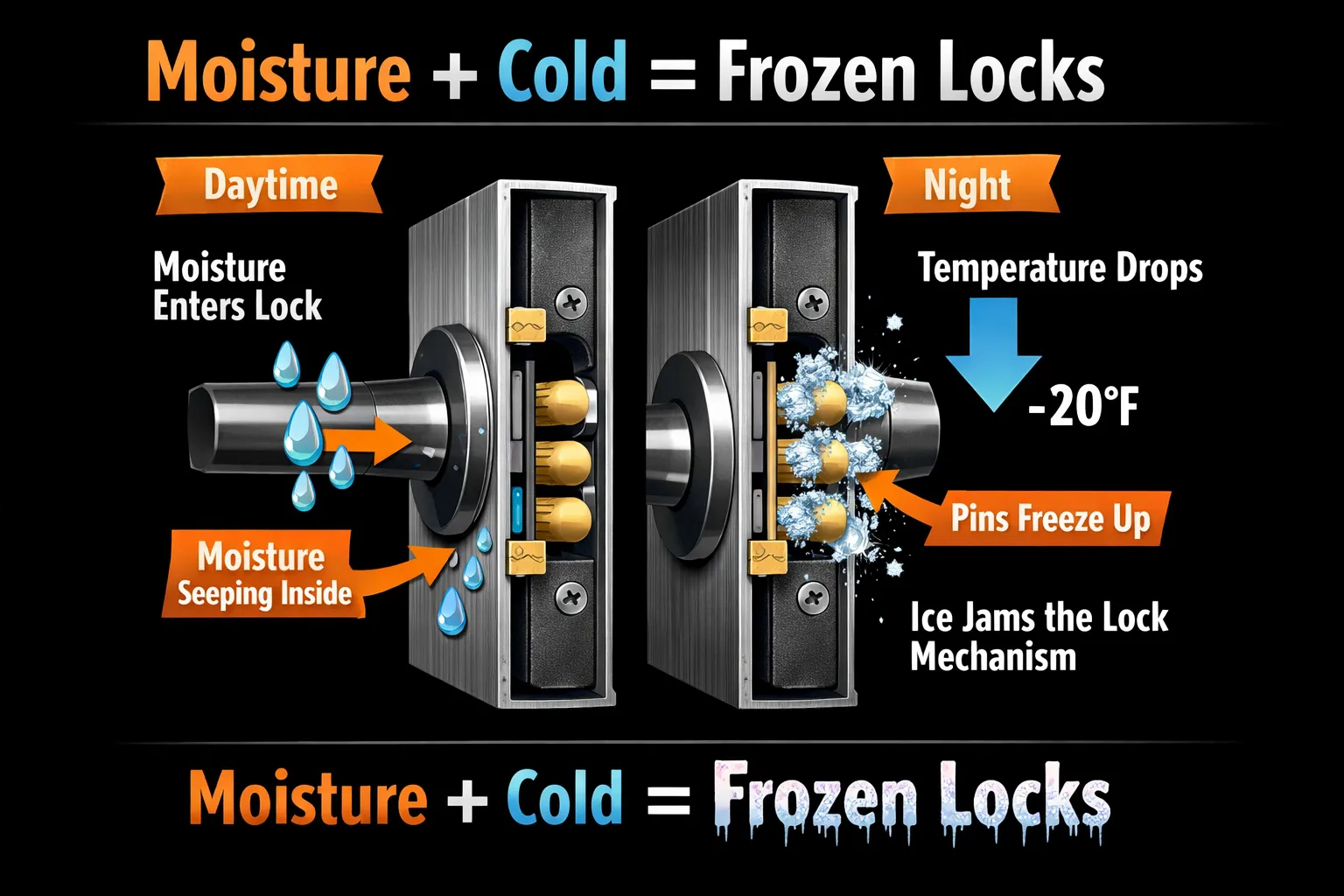
Locks freeze when moisture and cold combine. Here’s how it happens: During the day, moisture from the air gets inside your lock. At night, temperatures drop fast. This is common in Chorley, Preston, and nearby areas. The moisture turns into ice crystals. These ice crystals lock the moving parts together. Your key can’t turn the lock anymore.
Lancashire’s weather makes this problem worse. We’re close to the Irish Sea, so our air holds more moisture than drier places. Even in winter, humidity stays high. Plus, our temperatures fluctuate a lot. One day might be mild, then overnight it freezes. This pattern creates perfect conditions for frozen locks.
Common Factors That Contribute to Lock Freezing
Temperature Changes: Chorley and nearby areas see big temperature swings in winter. A warm day is followed by a freezing night. Water forms inside locks during the warm period. Then it freezes when temperatures drop. This happens over and over throughout winter—the constant freezing and thawing damage locks parts.
Exposure to Weather Front doors, garage locks, and gate locks face the worst conditions. Wind, rain, and frost hit them constantly. Properties near Rivington or outside town get even harsher weather. Strong winds push rain deep into the lock parts. This makes freezing much more likely.
Lack of Protection: Some locks have no cover or shelter. Garden gates, sheds, and garages often have locks that are completely exposed. Many older Chorley homes have doors that don’t protect locks from the weather. These unprotected locks freeze the most often.
Poorly maintained locks require regular maintenance to work properly. Without maintenance, they freeze more easily. Old lubricant gets thick and stops working in cold weather. Dirt builds up inside the lock. All of this creates spots where water collects and freezes. Most people don’t think about lock care until something goes wrong.
Prevention: The Best Defence Against Frozen Locks
Proper Lubrication Techniques
Choosing the Right Lubricant: Not all lubricants work well in cold weather. Many people use WD-40 on their locks. This is a mistake for winter care. WD-40 works great for quick fixes and pushing water out. But it’s not the best choice for keeping locks working all winter long.
Graphite powder is the best choice for Chorley’s cold weather. Unlike oil-based products, graphite doesn’t get thick when temperatures drop. Your locks will keep working smoothly even on the coldest mornings. Graphite makes a dry, slippery coating on metal parts. It won’t attract dust or dirt. And most importantly, it won’t freeze.

How to Apply Graphite Lubricant: Follow these easy steps:
- Buy graphite powder from any hardware store
- Put the applicator tube into the keyhole
- Spray a small amount—you don’t need much
- Put your key in and out several times to spread the graphite
- Wipe away extra graphite from the lock and key
Do this in early autumn, before winter really starts. Then do it again once a month all winter. Always reapply after rainy or snowy weather.
Other Good Options for Winter: Can’t find graphite powder? Try these instead:
- Dry PTFE spray lubricant—works like graphite but doesn’t leave black marks
- Silicone-based lubricants—handle cold well, but may attract some dust
- Lock de-icer with lubricant—both prevents and fixes freezing
Don’t use these in winter:
- Regular WD-40 (only use it for emergencies)
- Oil-based lubricants (get thick in cold and attract dirt)
- Grease (too heavy for lock parts)
Weatherproofing Your Door Locks
Installing Lock Covers Lock covers add extra protection against the weather. These cheap devices create a small shield over your lock. Rain and wind can’t push moisture into the lock as easily. You can find different styles to match your lock type and door style.
Choose covers that point downward. This stops rain from pooling around the lock. Magnetic covers work really well. They flip out of the way when you need to use the lock. Then they snap back into place to protect it.
Door Canopy Installation: Does your door have no cover overhead? Think about adding a small canopy. This helps a lot if your house sits in an exposed area. Even a small overhang prevents much of the moisture from reaching your lock.
Many Chorley homes, especially older terraced houses near Market Street, have doors that open right onto the street. There’s no protection at all. A canopy protects your locks. It also keeps you dry while you’re unlocking your door on rainy nights.
Weather Stripping and Seals: Check the rubber seals around your door. Are they damaged or missing? Bad seals let cold air and moisture get around the door frame. This makes your locks more likely to freeze. Good weatherstripping creates a barrier that keeps temperature changes from reaching your lock.
Replace worn weather stripping before winter arrives. This protects your locks and helps keep your home warm. You’ll save money on heating bills, too. For comprehensive home security, also review our guide on minimizing the risk of break-ins.
Key Care in Cold Weather
Keeping Keys Dry Wet keys bring moisture right into your lock. When you put a wet key into a lock, water gets inside. During Chorley’s rainy winter, this happens all the time. Make it a habit to dry your keys before using them. Keep a small cloth near your door. Or dry keys on your clothing first.
If you’ve been out in rain or snow, pay extra attention. Even a little bit of moisture from a wet key can freeze inside the lock overnight. This creates big problems the next morning.
The Body Heat Method: Your body heat can help on cold mornings. Before you put your key in the lock, warm it up first. Hold it in your closed hand for a minute. Or keep it in your pocket. This small amount of warmth can make the difference between a lock that works and one that’s stuck.
Never force a cold key if it won’t go in easily. Metal gets brittle in very cold weather. Your key might break off inside the lock. Then you’ll need to call an emergency locksmith.
UPVC Door Winter Adjustments
UPVC doors are very popular in Chorley and Lancashire. They save energy and require little care. But UPVC shrinks when it gets cold. This changes how your door fits in its frame. It also affects how well the lock works.
In winter, your UPVC door is harder to close. The key might need more force to turn all the way. This doesn’t always mean your lock is broken. Often, it’s just the door material shrinking in the cold.
Making Seasonal Adjustments UPVC doors have built-in adjustment points. You can change how the door sits in the frame. These adjustments fix problems caused by cold weather:
- Height Adjustment: If your door drops when it’s cold, adjust the hinges to raise it back up
- Side-to-Side Adjustment: Move the door left or right to line up properly with the lock
- Compression Adjustment: Change how tightly the door presses against the frame
Many Chorley homeowners get their UPVC doors adjusted twice a year. Once in autumn to get ready for winter. Once spring arrives and it warms up. First Pick Locksmiths offers UPVC door adjustments designed to stop winter locking problems.
Multi-Point Lock Maintenance UPVC doors usually have multi-point locks. These have hooks, rollers, or bolts that lock at several spots along the door edge. In winter, make sure all these points move smoothly:
- Check that all locking points engage easily when you lift the handle
- Listen for any strange sounds
- Put lubricant on all moving parts
- Make sure the door closes evenly all along the edge
If any locking points don’t work right, don’t force them. You could damage the whole locking system. That’s expensive to fix. Get professional help to adjust it properly. If you also need help with UPVC door handles, we can assist with that too.
Emergency Solutions for Frozen Locks
Even with good care, locks can still freeze sometimes. Here’s what to do:

Safe De-Icing Methods
Hand Warming Technique: The safest first step is gentle warming—cup both hands around the frozen lock. Keep them there for 30 to 60 seconds. Your body heat will slowly warm the lock. This works well for light frost. It won’t damage the lock at all.
De-Icer Spray Application Lock de-icer sprays are made to melt ice without hurting lock parts. These sprays contain alcohol that lowers the freezing point of water. Keep a can in your car during winter. Don’t keep it near the frozen lock—you won’t be able to reach it there!
How to use de-icer:
- Put the tube into the keyhole
- Spray a short burst inside
- Wait 30 seconds for it to work
- Gently try to put your key in and turn it
- Repeat if the lock is still frozen
Isopropyl Alcohol Method: No de-icer spray? Hand sanitizer can work. It has alcohol in it. Squirt a little bit on your key. Put the key in the lock. The alcohol will get inside and melt the ice.
Methods to AVOID
Never Use Water. Don’t pour warm or hot water on a frozen lock. This works. But it creates bigger problems. The water will melt the ice at first. But if any water stays in the lock, it will freeze again. Often harder than before. You’re also adding more moisture to the lock.
Don’t Use Fire. Never try to thaw a lock with a lighter or a match. This is dangerous. The heat is too strong and focused on one spot. It can damage the lock’s finish. It can also create fire hazards. This is especially risky around wooden doors or UPVC materials.
Avoid Forcing It. Don’t force a frozen key to turn. This is the fastest way to break your key. A broken key stuck inside the lock needs a professional to remove it. This turns a small problem into an expensive emergency. If your key won’t turn after a few gentle turns, call a locksmith.
When to Call First Pick Locksmiths
Some situations need professional help:
- The key broke off inside the lock
- The lock was damaged from trying to force it
- The UPVC door is completely frozen shut
- Business with several frozen locks
- An older adult is locked out in cold weather
- The lock keeps freezing even after you try to prevent it
First Pick Locksmiths provides 24/7 emergency service. We cover Chorley, Preston, Leyland, Wigan, and all nearby Lancashire areas. We usually arrive in under 30 minutes for emergencies. Our vans are equipped with specialized tools to safely and quickly fix frozen locks. Learn more about our emergency locksmith services in Chorley.
Long-Term Winter Lock Protection Strategies
Professional Lock Assessment
Think about getting your locks checked before winter starts. A professional locksmith can find problems before they become emergencies:
- Looking for worn parts that might fail in cold weather
- Finding which locks are most likely to freeze
- Suggesting better locks for problem areas
- Doing a thorough cleaning and lubrication
- Testing all backup doors to make sure they work
This service usually costs much less than an emergency call. It gives you peace of mind all winter long. Learn more about why you need a professional locksmith and how to choose a reliable locksmith for your property.
Upgrading to Cold-Resistant Locks
Do some locks freeze no matter what you do? It might be time for an upgrade. Modern locks have features that resist freezing. Learn more about upgrading your door locks for better winter performance.
Weatherproof Locks: These locks have sealed parts. Moisture can’t get inside at all. They work great for exposed spots like garages, gates, and sheds.
Smart Lock Solutions Electronic locks don’t have moving metal pins that freeze. They work reliably in cold weather. Battery-powered smart locks need to be watched in winter. Batteries drain faster when it’s cold. But most systems warn you when the battery is getting low. Many have backup power options.
Anti-Frost Lock Designs: Special locks feature coatings and materials that resist ice. They cost more than regular locks. But they’re worth it for problem areas or important doors. Contact us for advice on lock repairs and replacements in Chorley.
Creating a Winter Maintenance Schedule
Set up a routine for winter lock care:
Every Month:
- Check all outdoor locks for moisture or stiffness
- Put graphite lubricant on your main door locks
- Test all backup doors
- Check that the weather stripping is still in good shape
After Bad Weather:
- Look at locks after heavy rain or snow
- Check for ice forming around lock faces
- Dry and lubricate any locks that got wet
Before Frost:
- When frost is coming, add extra lubricant
- Make sure the de-icer spray is easy to reach
- Tell everyone in your house about proper key care
Additional Winter Security Considerations
Don’t Forget Vehicle Locks
Car door locks have the same winter problems as house locks. They’re often more exposed to the weather, too. Take care of vehicle locks in Chorley’s climate:
- Keep de-icer in your pocket or bag, not in the frozen car
- Use graphite lubricant on car locks in autumn
- Think about rubber covers for keyholes
- Park under cover when possible during very cold weather
Garage and Outbuilding Protection
People often forget about garages, sheds, and outbuildings. But these locks face the worst conditions with the least protection:
- Put simple covers over padlocks
- Use plenty of weatherproof lubricant
- Think about replacing exposed padlocks with weatherproof models
- Make sure you have backup ways to get in
Business Premises Considerations
Chorley business owners face special winter lock challenges:
- Many staff members use the locks, causing more wear
- Business buildings often have more exposed locks
- Lock problems can stop business and cost money
- You can’t leave doors open to avoid lock problems—that’s a security risk
First Pick Locksmiths offers business winter lock care contracts. We make sure all your business doors work throughout winter. Regular professional care prevents lost time and security issues caused by frozen locks.
Regional Considerations for Chorley and Lancashire
Microclimate Awareness
Different areas around Chorley get different winter weather:
Exposed Areas: Homes in Whittle-le-Woods, Heath Charnock, and near Rivington get stronger winds and harsher weather. Locks in these spots need maximum protection.
Town Centres: Properties in Chorley town centre and Preston might be slightly warmer because of all the buildings. But they still need full winter care.
Lower Areas: Homes near the Leeds and Liverpool Canal or in valleys get more morning frost. These locks need extra attention at night. If you’re in Leyland, Coppull, or Lostock Hall, pay special attention to morning frost conditions.
Community Resources
Lancashire County Council provides winter weather updates and cold weather warnings. Check these to know when to do extra lock care before bad weather arrives.
Local Chorley hardware stores sell winter lock supplies. Getting to know local suppliers helps. You can get de-icer sprays and lubricants quickly when you need them.
Winter-Ready Locks for Peace of Mind
Winter lock problems in Chorley and Lancashire can be predicted, prevented, and fixed. Follow the steps in this guide. Use regular lubrication. Add weatherproofing. Take care of your keys. Make seasonal adjustments. You can stop most frozen lock problems before they start.
Spending a little time and money on prevention pays off big. A few pounds for graphite and weather protection saves you from expensive emergency locksmith calls on freezing mornings. It also saves you from the stress and frustration of being locked out.
Remember that First Pick Locksmiths is Chorley’s trusted locksmith here to help Chorley residents and businesses with all winter lock challenges. We offer preventive maintenance, emergency assistance, and advice on upgrading problematic locks. Our experienced team provides reliable, professional service throughout Lancashire. Check our frequently asked questions for more information.
Don’t wait until the first hard frost to discover your locks aren’t ready for winter. Take action now. Protect your property access. Make sure you’re never stuck outside in the cold this winter.
FAQs for Winter Lock Maintenance Lancashire
What should I do if my lock is frozen right now?
First, don’t panic or force the key. Try warming the lock with your hands for 30-60 seconds. If that doesn’t work, use lock de-icer spray if you have it. You can also put hand sanitizer on your key – the alcohol will help melt the ice. Never pour hot water on the lock or use a lighter. If the lock won’t open after these tries, call First Pick Locksmiths for emergency help. We’re available 24/7 throughout Chorley and Lancashire.
How often should I lubricate my locks during winter in Chorley?
You should lubricate your locks with graphite powder in early autumn before winter starts. Then reapply it once a month throughout winter. Also, add extra lubricant after any heavy rain or snow. This regular care keeps moisture out and prevents freezing. If you’re not sure how to do it properly, First Pick Locksmiths can set up a maintenance schedule for your property.
Why does my UPVC door lock get harder to use in cold weather?
UPVC material shrinks when temperatures drop. This changes how your door fits in the frame. The lock might need more force to turn, or the door might be harder to close. This doesn’t always mean something is broken – it’s often just the cold affecting the door material. You can adjust UPVC doors to fix this. Many Chorley homeowners get their doors adjusted twice a year – once in autumn and once in spring. First Pick Locksmiths offers UPVC door adjustment services to prevent winter problems.
Can I use WD-40 to stop my locks from freezing?
WD-40 is not the best choice for winter lock care. It’s great for emergencies and pushing water out, but it’s not good for long-term winter protection. Use graphite powder instead. Graphite doesn’t get thick in cold weather as WD-40 does. It creates a dry coating that won’t freeze or attract dirt. You can buy graphite powder at any hardware store in Chorley. If you need help choosing the right product, contact First Pick Locksmiths for free advice.
Are some locks more likely to freeze than others?
Yes. Locks with no weather protection freeze most often. This includes locks on garden gates, sheds, garages, and older homes without door canopies. Properties in exposed areas like Whittle-le-Woods, Heath Charnock, and near Rivington get worse weather and see more frozen locks. If your lock keeps freezing, consider upgrading to a weatherproof lock or adding a lock cover. First Pick Locksmiths can assess your property and recommend the best solutions for your specific situation in Lancashire.
Contact First Pick Locksmiths for Winter Lock Services
24/7 Emergency Service Available. Are you locked out right now because your locks are frozen? Call us immediately for fast help. We serve Chorley, Preston, Leyland, Wigan, and all nearby Lancashire areas.
Preventative Maintenance Appointments Book your winter lock check before cold weather arrives. Our service includes professional cleaning, lubrication, and weatherproofing of all your locks.
Expert Advice: Not sure if your locks need attention? Contact First Pick Locksmiths for free phone advice. Our team knows Lancashire’s winter conditions well. We can tell you the best solutions for your situation.
Protect your property, your security, and your peace of mind this winter. Let First Pick Locksmiths help you get winter-ready. We’ll make sure your locks work reliably even in the coldest Chorley weather.
Service Areas: We provide locksmith services in Chorley, Preston, Leyland, Wigan, Bamber Bridge, Standish, and throughout Lancashire.
